
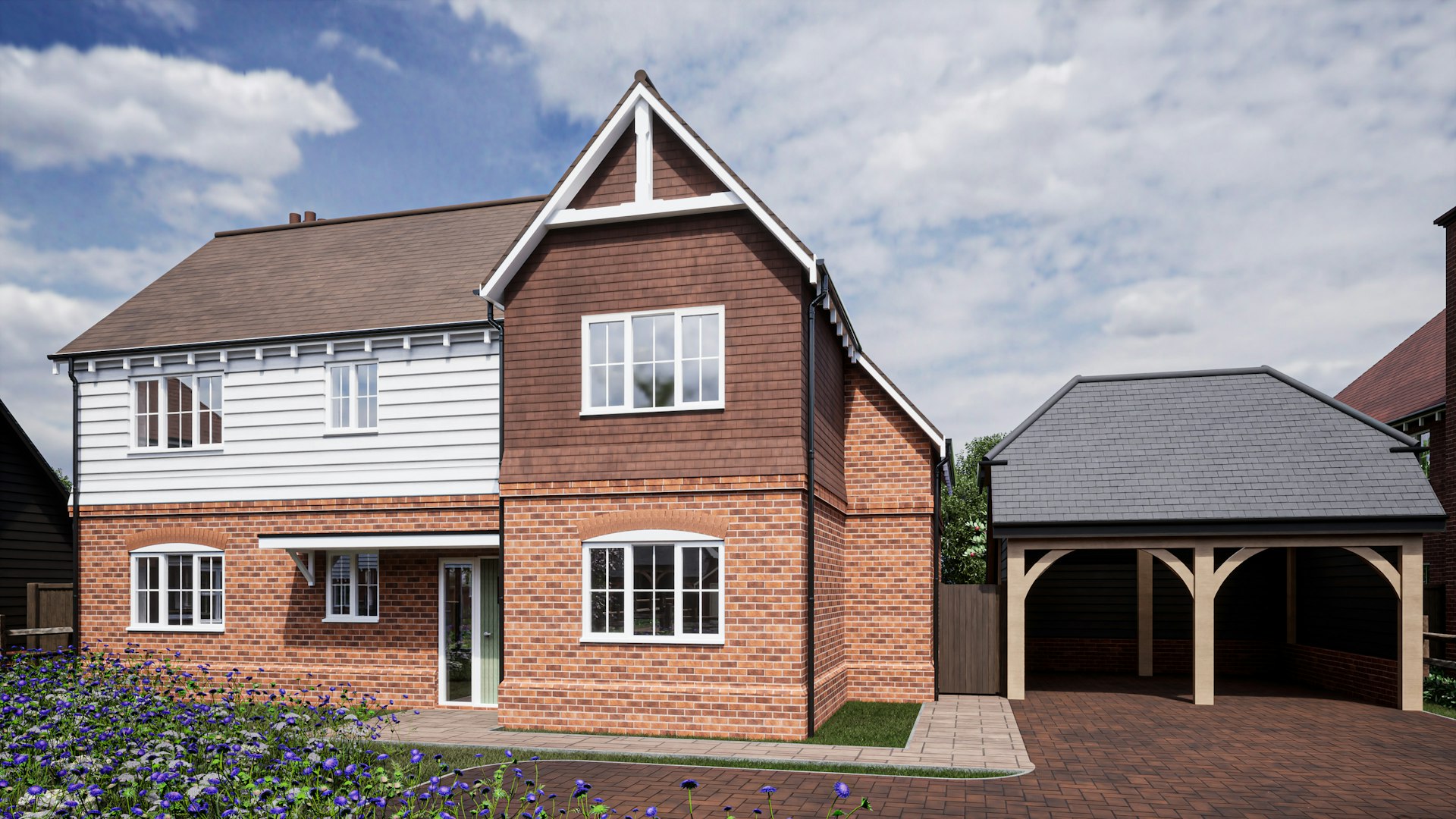
There's no rule that says your front door has to be a particular colour. But there are patterns — choices that quietly look right against a particular kind of house, and choices that fight the building.
Start with the brick (or render)
What's the dominant colour of the wall the door sits in? Red Victorian brick wants a different door than buff sandstone, which wants a different door than white-rendered new-build.
Red brick
Red brick works hard against warm tones (it ends up looking pink and unsettled). It loves blues, deep greens, blacks, and Chartwell-style sage greens. Avoid: cream, magnolia, light oak.
Sandstone or buff brick
More forgiving — most colours work. Period properties in sandstone (Newcastle terraces, Durham streets) look fantastic with deep blue or burgundy. Modern sandstone-clad new-builds suit gunmetal grey or anthracite.
Rendered or painted walls
If the render is white or cream, your door is doing the heavy lifting visually — go bold. Black, deep red, navy, racing green. If the render is a strong colour itself, pull back: warm wood-effect (light oak, rosewood) keeps it grounded.
Match the period (loosely)
You don't need to be authentic — composite doors aren't authentic anything — but you can choose proportions and colours that nod to the period.
- Victorian and Edwardian: deep blues, blacks, burgundies, racing greens — period-correct and brick-flattering.
- 1930s semis: cream, sage green, soft red. Avoid black on an interwar semi unless the rest of the house can take it.
- Post-war estates: anything modern — gunmetal, anthracite, duck-egg, chartwell.
- New-builds: anthracite is the safe default; gunmetal greys, deep navies, and matt black all work hard.
Look at the neighbours
If you're on a terrace where every other door is dark green, fitting a bright red one will draw the eye. Sometimes that's exactly what you want; sometimes it isn't. The street rarely has to match — but consider whether you want to stand out.
You can colour-match the frame to the door, or contrast them (white frame on a dark door is timeless). Mixing on the inside vs outside is also possible — modern matt black outside, brilliant white inside is a popular spec.
Most-fitted colours, in order
- Anthracite grey (the modern default — works on almost anything)
- Black (timeless, particularly on period terraces)
- Chartwell green (sage; period-correct on Victorian and Edwardian frontages)
- Duck-egg blue (1930s, cottages, soft renders)
- Light oak (period properties where wood-effect feels right)
- Red (Georgian, period, and confident statement frontages)
- White (new-builds where the door is meant to vanish into the trim)
Bespoke colours
Beyond our ten standard colours, we can source any RAL colour as a bespoke order. The premium is around £110 and the lead time is similar. Common bespoke choices: French navy, racing green deeper than our standard, slate grey, mustard.
See it in person
Colour samples on a screen are not what arrives on your house. We bring real-life painted samples to every survey, and our Kingston Park showroom has every standard colour on a full-size door under daylight. Always worth a visit before signing off.
Frequently asked
Does the colour change the price?+
Standard colours are all the same price. Premium colours (Chartwell green, Light Oak, Rosewood) add £110 — these are wood-effect finishes that take more passes to apply. Bespoke RAL colours are similar.
Will the colour fade?+
No, not within the life of the guarantee. The colour is baked into the GRP skin, not painted on, so it's not exposed to sunlight the way a painted door would be. Our 10-year guarantee covers colour stability.